

Understanding What’s Getting in the Way
I focus on understanding what’s actually getting in the way—whether that’s anxiety, ADHD, overwhelm, or difficulty following through. From there, we take a practical, step-by-step approach to help things start moving forward.

A Practical Path Forward
My approach is practical and goal-oriented, with a focus on helping you see meaningful progress within the first several sessions. We start by clearly defining what’s going on and what you want to change, then work together to identify strategies you can apply in your day-to-day life.
I often describe the process as collaborative problem-solving — we develop ideas, test what works, and adjust as needed. Each session builds on what you’re learning so you can create steady, realistic progress over time.

When a Young Adult Feels Stuck
When a young adult feels stuck, it’s often not about a lack of effort or motivation. Anxiety, ADHD, overwhelm, or difficulty with follow-through can make even simple next steps feel impossible.
I work with both young adults and their families to create a clear, realistic path forward. This process is structured but flexible, and typically includes a combination of parent sessions, family sessions, and individual sessions with the young adult.
We start by understanding what’s happening from everyone’s perspective, then develop a practical plan with small, achievable steps. Individual sessions help build follow-through and accountability, while family sessions support communication and adjust the plan as needed.
The goal is to reduce tension, increase independence, and help everyone feel more confident about the direction things are going.

When Work Starts to Feel Unsustainable
Many adults find themselves stuck in work situations that feel unsustainable — whether that’s constant stress, burnout, lack of direction, or feeling trapped in a role that no longer fits.
These challenges are often connected to anxiety, ADHD, or patterns of overthinking and pressure that build over time. Together, we work to understand what’s contributing to that feeling and create a practical plan for change.
This might include setting boundaries, improving focus and follow-through, or exploring next steps that feel more aligned and manageable. The goal is to help you feel more in control, more clear, and more confident in how you move forward.
When We Need to Go Deeper
Sometimes, even with clear goals and practical steps, something still feels stuck — like there’s a deeper layer that’s hard to access through talking alone.
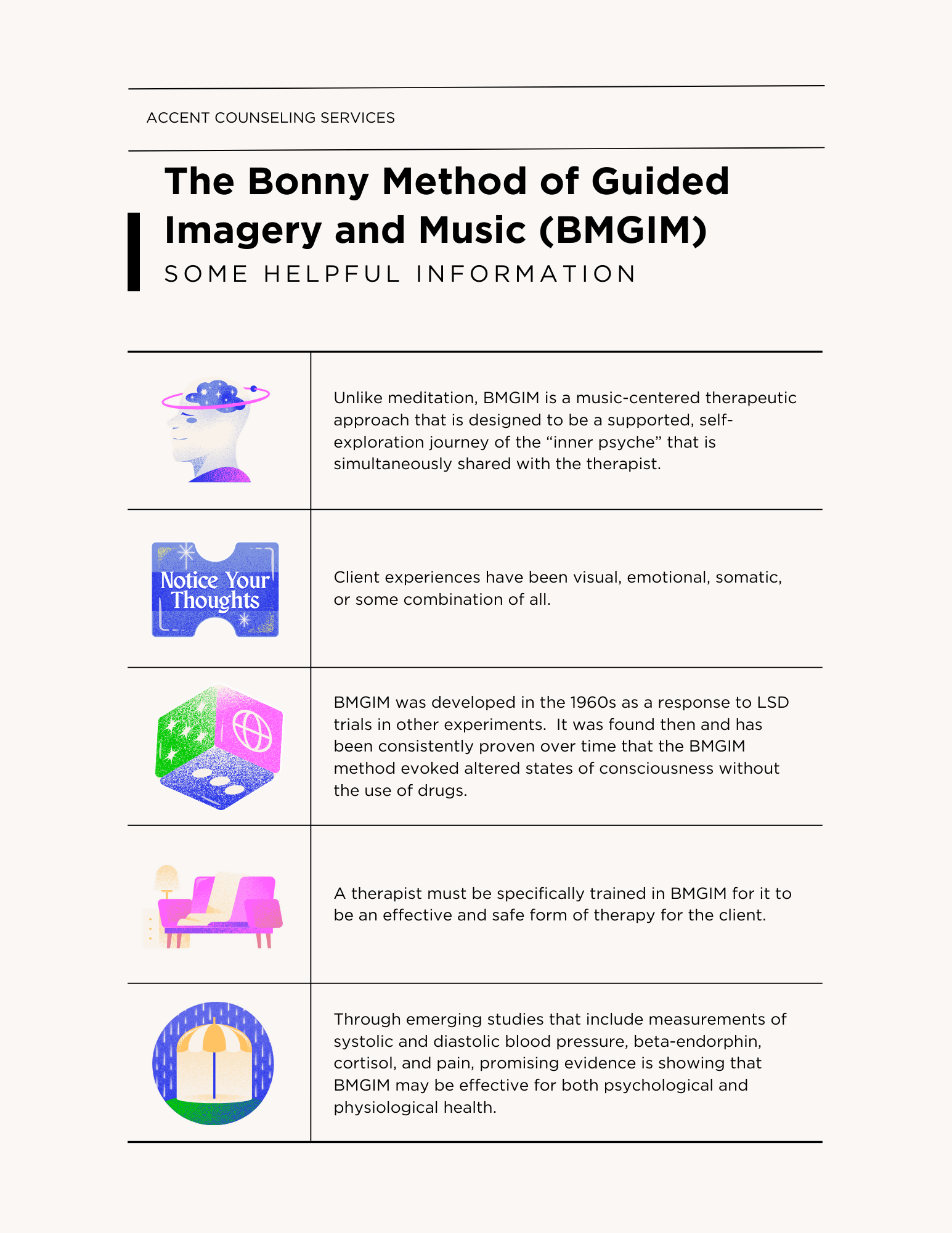
In those cases, I offer the Bonny Method of Guided Imagery and Music (BMGIM), a structured, evidence-based approach that uses music and guided reflection to help access deeper thoughts, emotions, and patterns.
Rather than traditional talk therapy, this process invites you to notice images, sensations, or shifts in awareness while listening to carefully selected music. We then spend time processing the experience together, helping you make sense of what comes up and how it connects to your life.
These sessions are used thoughtfully and are not necessary for everyone, but they can be especially helpful when you feel blocked, unsure, or unable to fully access what’s underneath the surface.
Due to the depth of this work, this approach is not recommended for individuals under 18 or those experiencing active psychosis.
Contact us
Please reach out with any questions or concerns.